Storytelling
SEAL PUP &
FOX
Every spring, around April, ringed seal pups are born on the Arctic sea ice. To survive their first weeks of life, they must stay well hidden beneath the snow, inside a small lair built by their mother. There, sheltered from the wind and the cold, the pup waits to reach its fourth week, the moment when it finally becomes waterproof. Until then, it fully depends on its mother’s milk and care. But not all sea ice offers the same protection.
A textured and chaotic ice, shaped by wind and pressure, creates cracks, ridges, and snowdrifts that are perfect for hiding. In contrast, a flat and regular sea ice leaves the pups exposed, with nowhere to shelter from predators such as polar bears, Arctic foxes, or gulls.
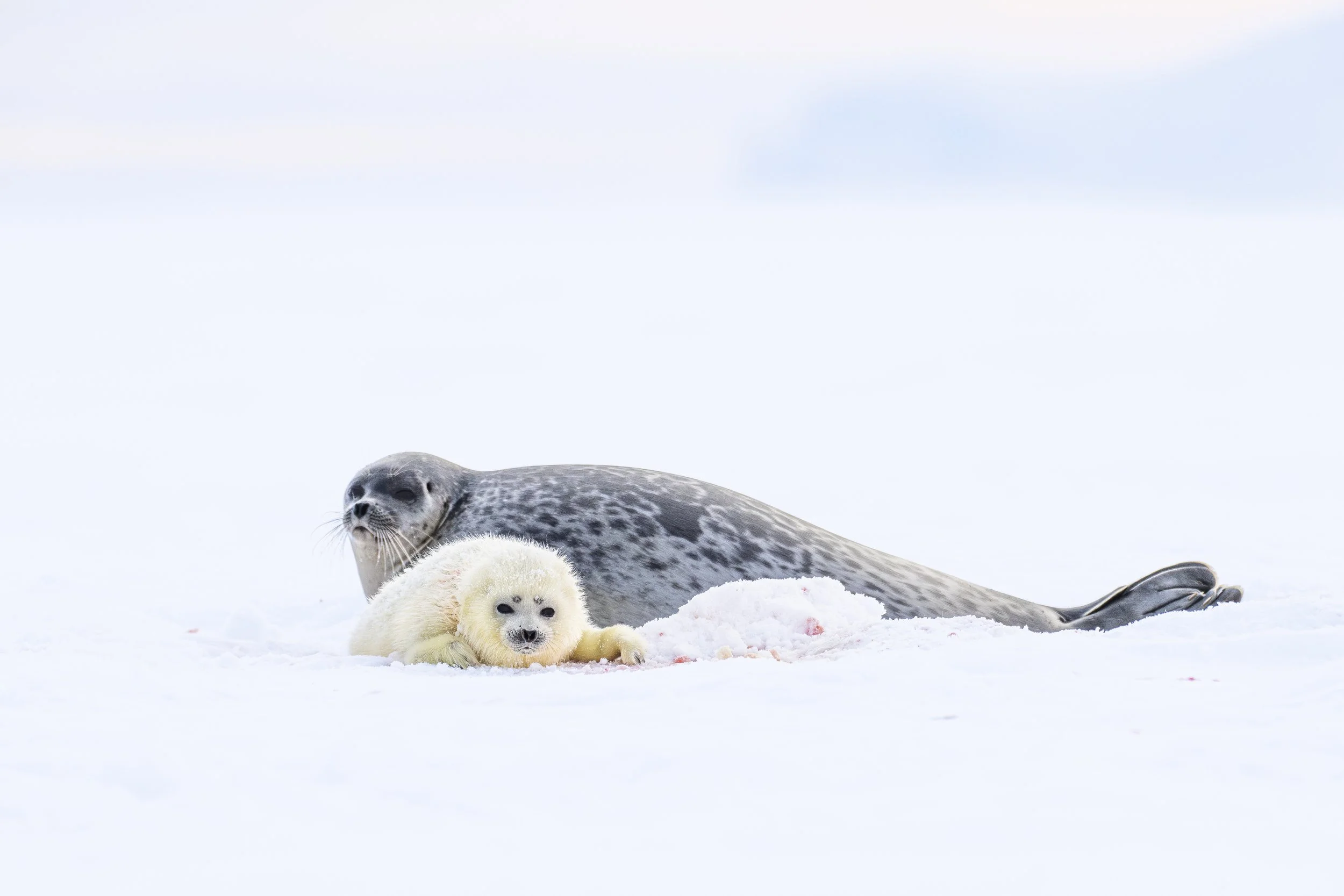
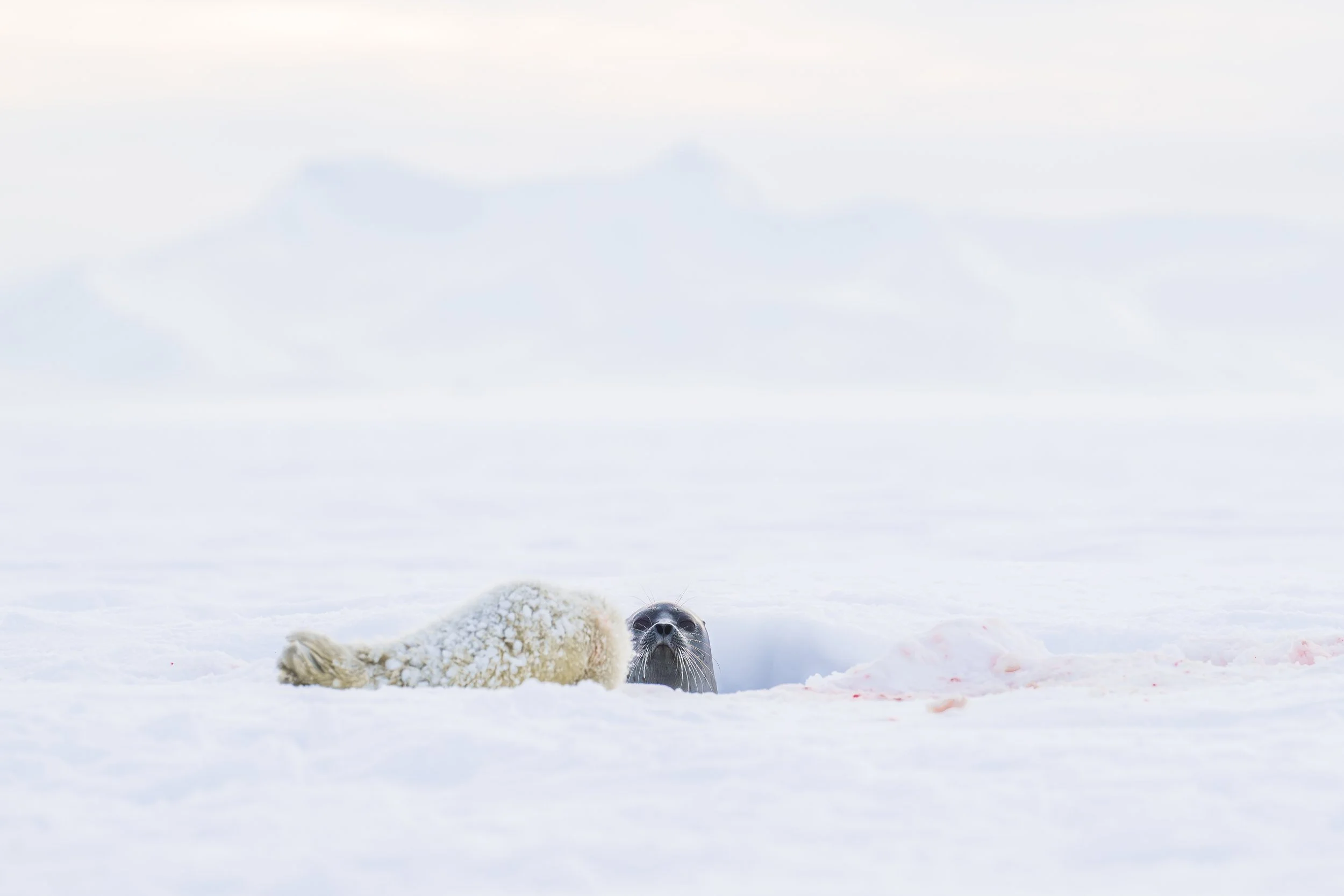
In these flat and open icescapes, opportunistic predators quickly take advantage of the situation. Arctic foxes, in particular, are masters at finding weak spots in the frozen landscape. As soon as the sea ice forms near the coast, they leave their dens and travel along the edges of the fjords, always alert, scanning the ice for signs of life. When a seal gives birth on flat ice, without the shelter of snowdrifts or ridges, the pup becomes an easy target. The fox can smell it from far away and patiently wait for the right moment to strike. For these tiny seals, the difference between a chaotic and a flat sea ice can mean the difference between life and death.
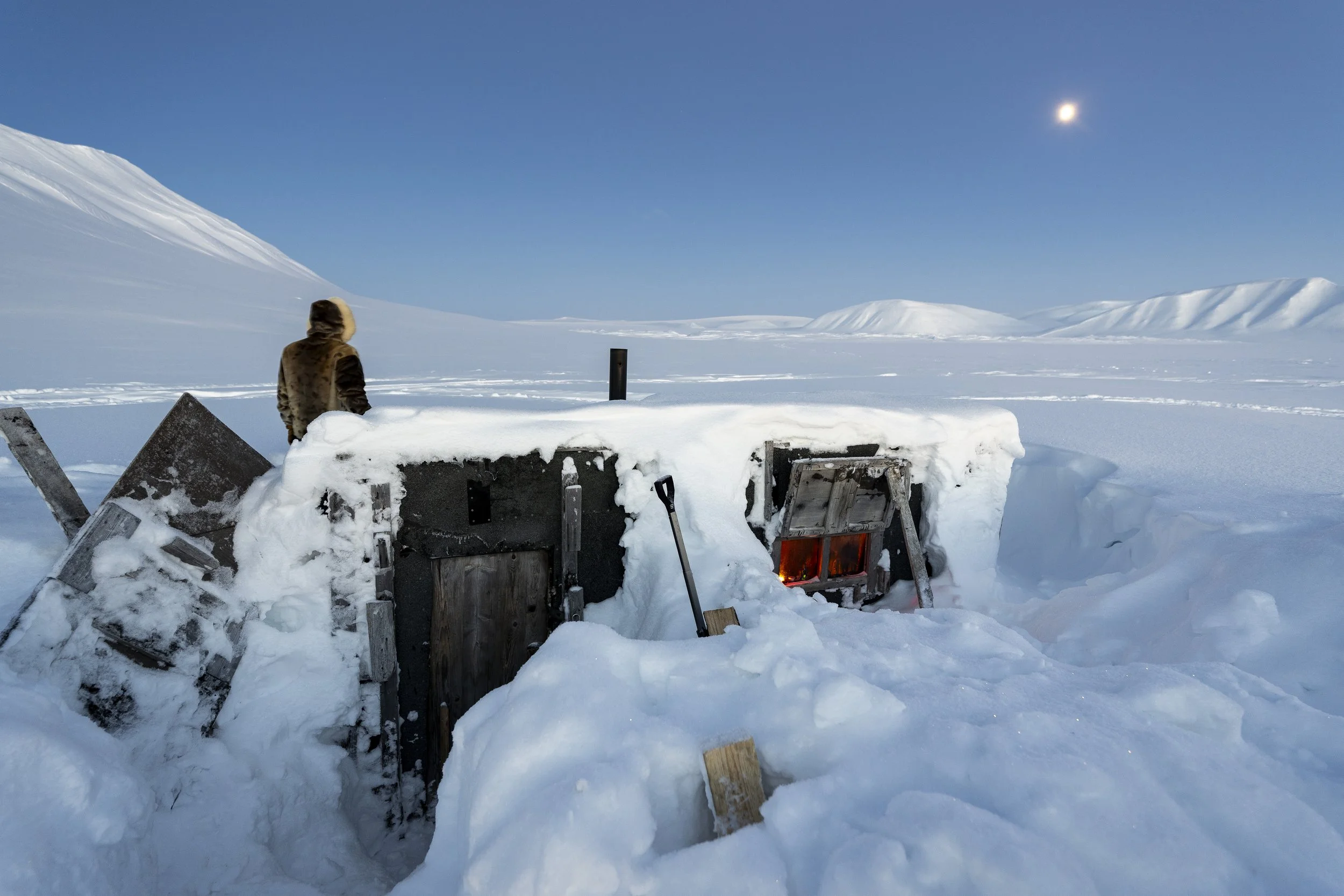
We were lucky enough to witness this on the sea ice, hours spent filming and observing the tender moments between a mother and her pup. We kept a respectful distance, careful not to disturb them, and over time, she seemed to accept our quiet presence on her frozen world.
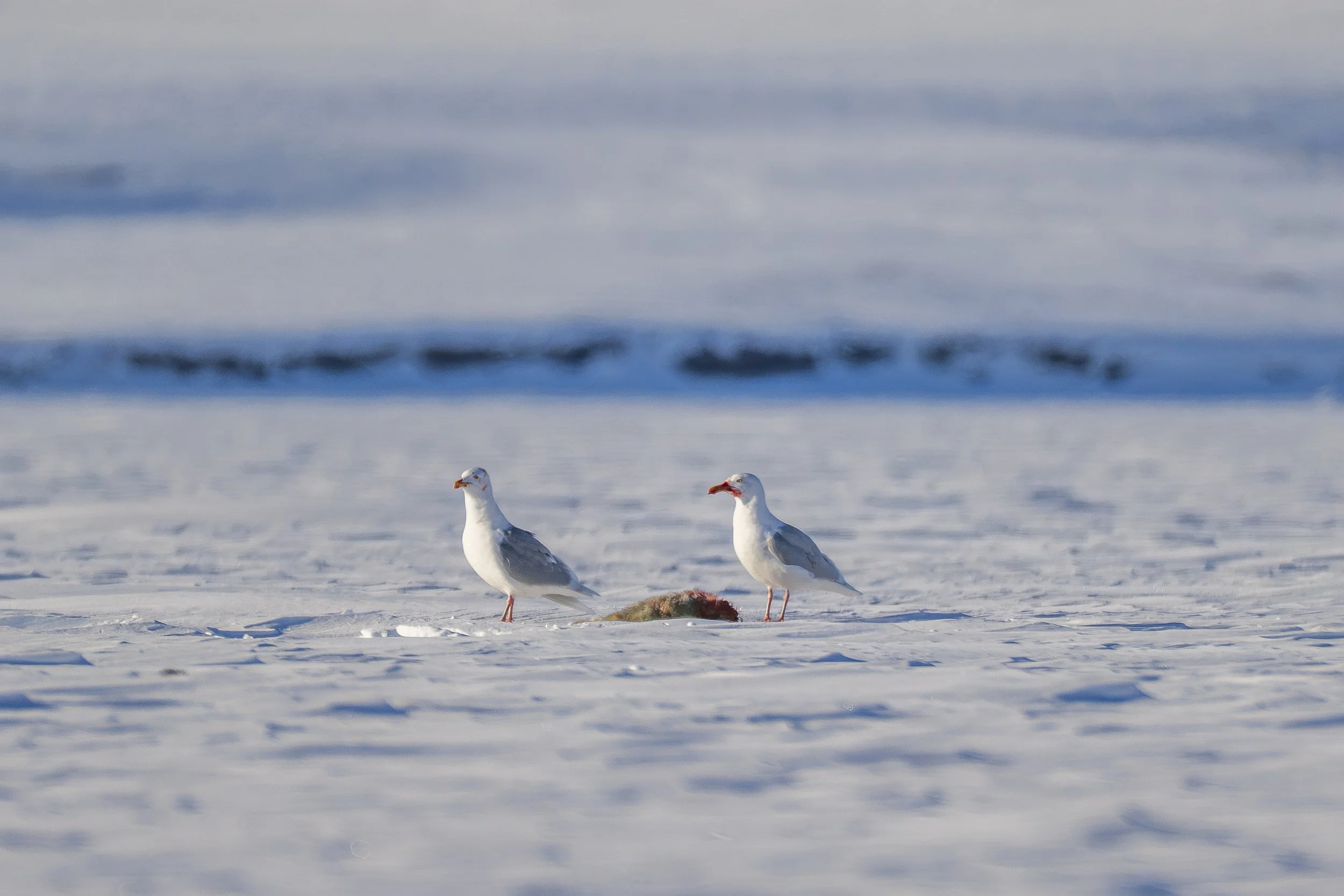
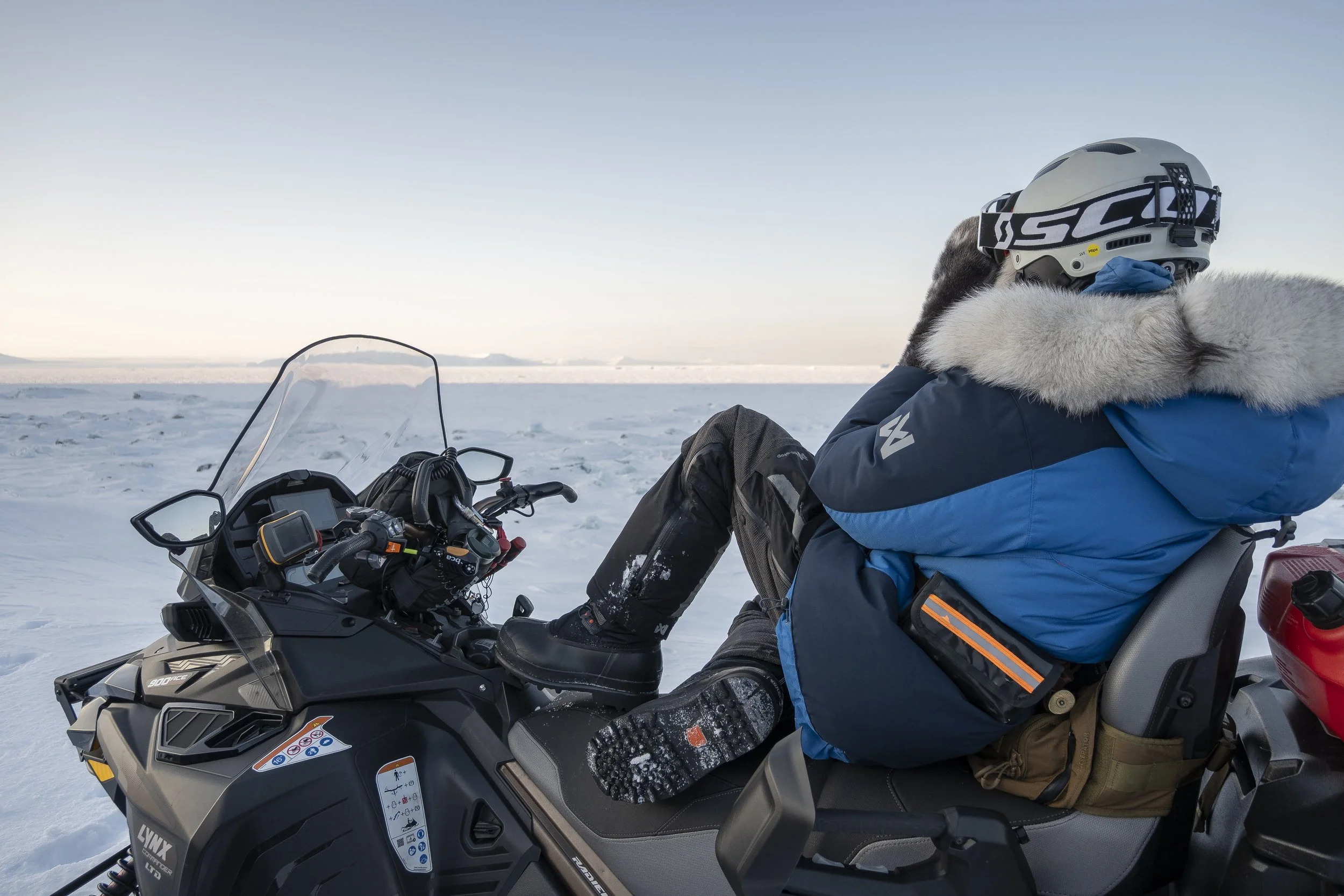
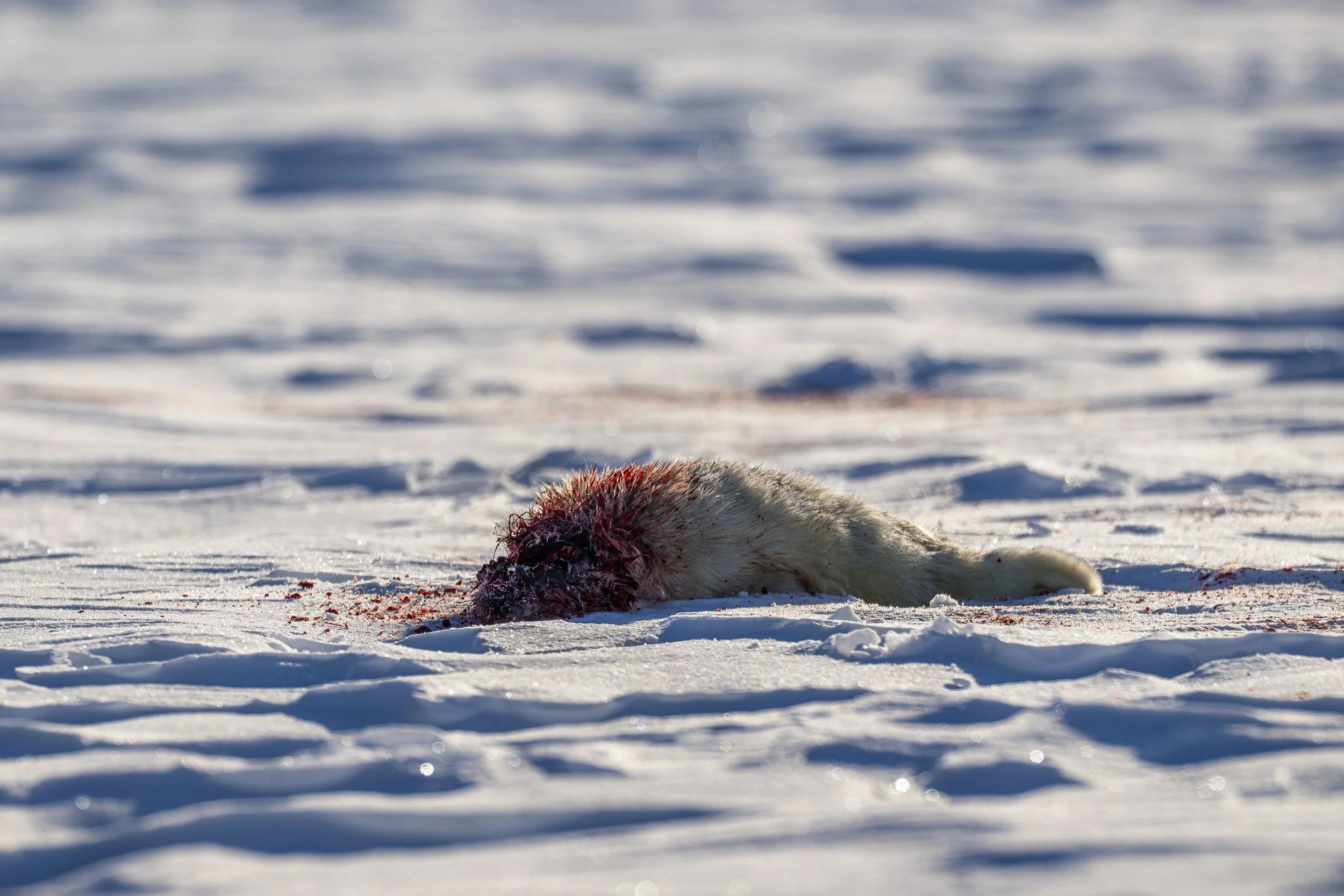
The next day, after recharging our batteries and transferring hours of footage from our memory cards, we returned to the site, hoping to continue our documentary. Halfway there, during a coffee break on our snowmobiles, a sudden sense of dread washed over us an uneasy feeling that we would never see our pup again. And once we arrived, our intuition proved true. There lay the tiny seal, lifeless, the mother nowhere in sight. Seagulls had already begun picking at the carcass, and it quickly became clear that it was these opportunistic birds that had claimed the pup. The harsh reality of Arctic life struck us one more time: Nature can be brutally unforgiving.
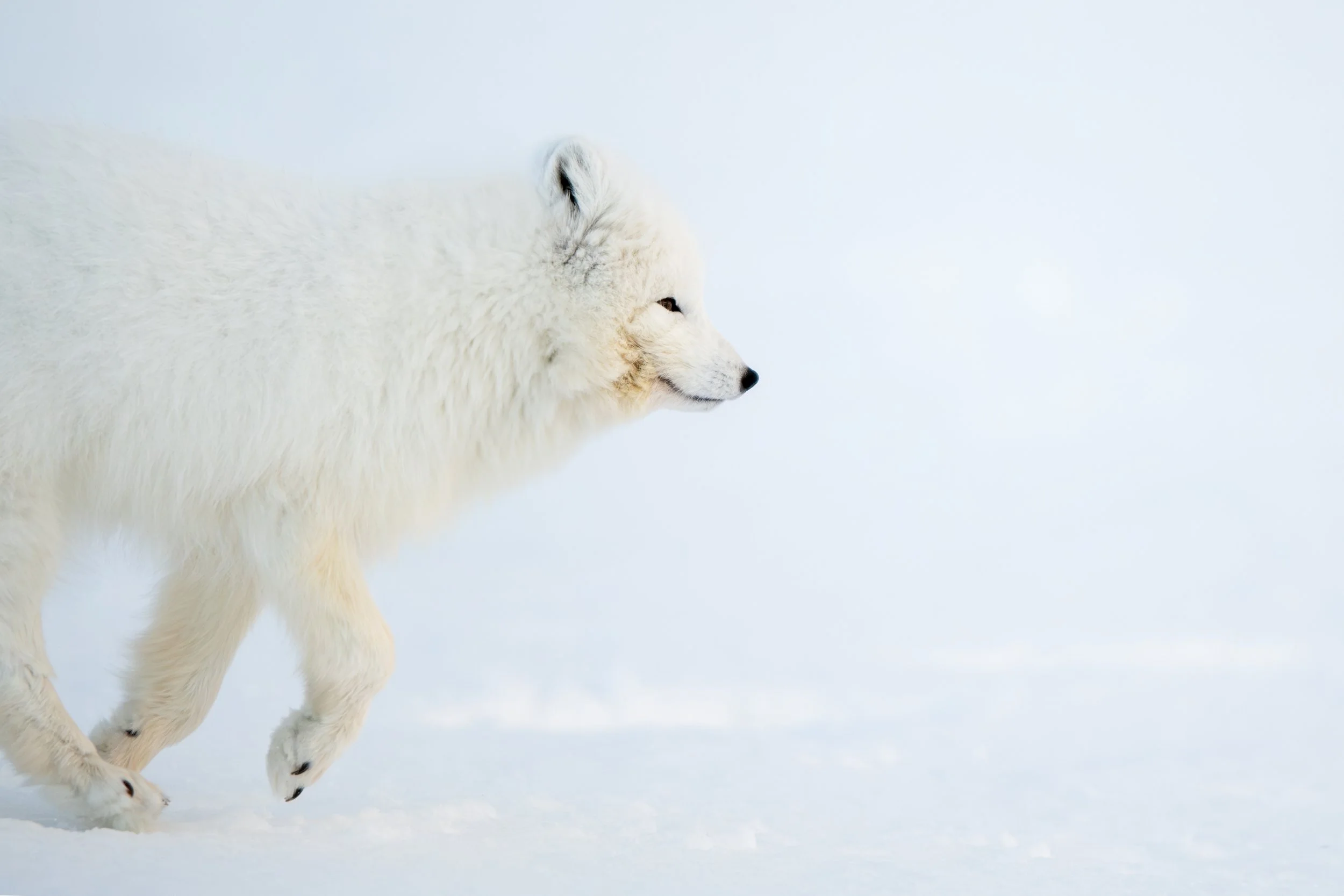
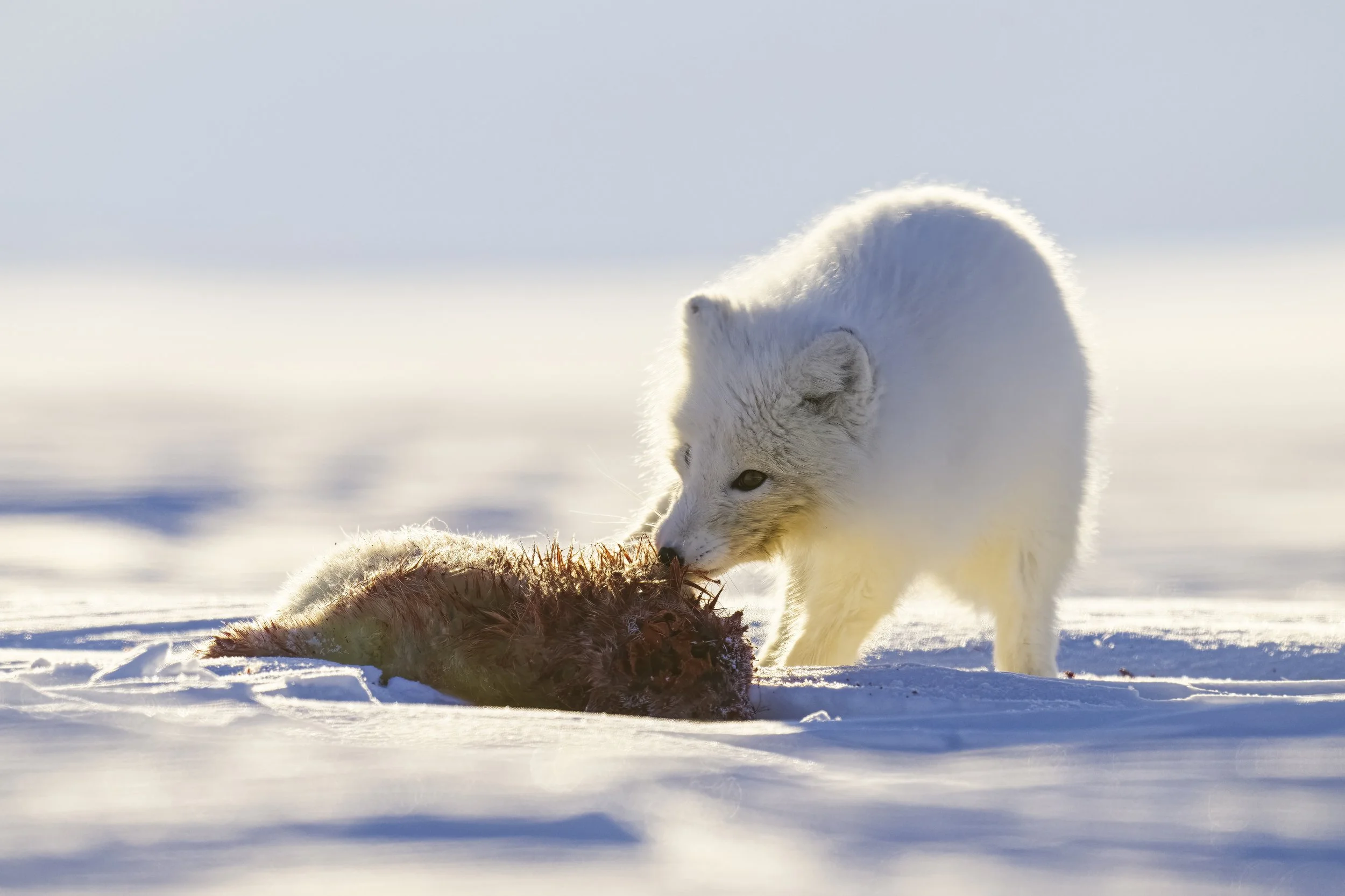
We tried to film the seagulls, but they are extremely sensitive to any presence. Even the slightest noise or movement scares them away, and they immediately leave the area. Realizing this, we decided to set up a camera trap. We left our large cameras on the ice and stepped back about 400 meters, hoping to capture their natural behavior. But even that distance wasn’t enough, the birds still didn’t return. So, we moved several kilometers away for a few hours, giving them space. When we returned, our memory cards were full, and our excitement grew. To our amazement, the very first image that appeared on the screen was that of a magnificent Arctic fox, healthy and alert. We realized that we had captured several minutes of rare footage, filmed in incredible light, truly unforgettable moment on the ice.
The mother seal does everything she can to protect her newborn. She stays close to the breathing hole, always ready to defend or escape if danger approaches. Each time she surfaces to feed her pup, she keeps her head high, scanning the horizon for foxes or bears. Her instinct tells her that every minute counts, that she must keep her baby alive until it grows strong enough to survive on its own. The bond between them is silent but powerful, shaped by the rhythm of the tides, the crackling ice, and the constant presence of predators.